


Remembering the journey; civil rights 60 years later

by Robin Dorner
Editor in Chief
In early July 2008, I had the honor and privilege of interviewing civil rights leader and Oklahoma school teacher, Miss Clara Luper. Luper was born and lived in Oklahoma her entire life but made a difference across the nation.
It has now been over 60 years ago in downtown Oklahoma City that Luper and 12 young people changed the city and helped change America. Their actions further changed the wave of the entire civil rights movement.
All they wanted was to drink a Coke at the counter of Katz drugstore.
In my 2008 interview with Luper, she said of the outcome of her sit-ins with these youth, “What changed is the pressure facing injustice; and of course, the news media coverage. We went to Katz ‘cause that’s where we spent our money.” At the time, blacks were allowed to shop at the drugstore, but if they wanted food or drink, those items were put in a brown paper bag to be eaten outside.”
These young people lead by Luper began these sit-in’s on August 19, 1958, and five days later they were finally served.
For five days they endured name-calling, being spit on and hearing things like, “Ni****, go home,” and “What’s wrong with you colored people?”
The group sat from open to close at the counter of Katz drugstore until near 5 pm on August 23 when they were finally served.
“They finally figured, ‘What would it hurt to just serve these people?’, and they realized nothing changed when they finally served us,” said Marilyn Hildreth in the same interview. Hildreth is the daughter of Clara Luper and was one of the 12 youth who endured five days at the counter of Katz some 60 years ago.
“We figured something would happen and we did not know what fear was,” Hildreth said. “Momma taught us about the life of Dr. King and Gandhi with their non-violence, and we just went.”
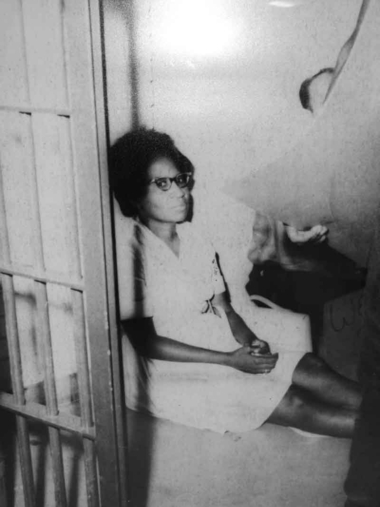
Just before the historical sit-in’s, Luper had returned from a trip to Washington, D.C. where she had been invited by Henry Wright, the Youth Director of the NAACP. He had invited Luper and her cast to perform the play she had created for Negro History Week titled, Brother President.
“A taste of freedom is a dangerous thing,” said Luper. “When I returned from Washington, I saw how far back we were in Oklahoma City.”
With the success of changing the face of Civil Rights in Oklahoma City, Katz drugstore soon opened all of their stores to blacks. It included all 38 stores in a four-state area. “But hearts don’t change that rapidly,” said Luper who was also arrested 26 times for her action to advance the civil rights movement in Oklahoma City.
Many months before my interview, Luper had suffered a stroke and had several other health problems. To the best of my knowledge, I was the last reporter to interview Clara Luper. She soon became unable to communicate and became homebound.
She died on June 8, 2011, at the age of 88. Due to her large following, services were held in the Cox Convention Center in downtown Oklahoma City.
This is a revised version of a story which ran in the August 20, 2008 issue of The City Sentinel.
Copyright The Gayly – February 6, 2019 @ 7:10 a.m. CST.