


A guide to holiday health and safety for the entire family
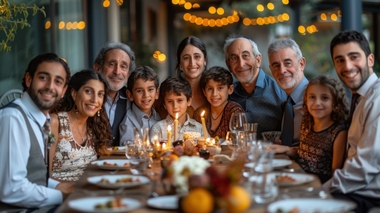
The holiday season is meant to be the most wonderful time of year. Still, between disrupted schedules, sky-high gift expectations, and college students returning home, it can also bring a whirlwind of stress and safety hazards for the whole household.
Making the Most of the Holiday Break: A Mental Health Check-In. Youth mental health remains a critical area of focus. According to the 2024-2025 Healthy Minds Study – the nation’s largest annual survey on college mental health – 37% of college students report experiencing moderate to severe depressive symptoms, and 32% report moderate to severe anxiety. Furthermore, the CDC’s Youth Risk Behavior Survey shows 40% of U.S. high school students reported experiencing persistent feelings of sadness or hopelessness.
“When students come home for holiday break, families often need to renegotiate their relationship,” shares Stacy Doumas, M.D., MBA, chair of Psychiatry for the Southern Region of Hackensack Meridian Health and chair of the Department of Psychiatry at Hackensack Meridian Jersey Shore University Medical Center. “Parents are used to being the ‘manager,’ but as students gain independence, parents must transition to a supportive ‘consultant’ role. This visit home is a critical time to look for changes in your teen’s baseline and proactively set up mental health support.”
Navigating the Holiday Hustle & Managing Gift Expectations: If you feel the pressure this season, you are not alone. According to a 2023 holiday stress survey by the American Psychological Association, 41% of U.S. adults say their stress increases during this time of year, with 40% reporting feeling stressed just about finding the “right” gifts.
“Gift expectations can be a huge source of stress, especially with social media amplifying what kids think they ‘should’ be getting,” says Thomas Priolo, M.D., Medical Director of Child and Adolescent Consult-Liaison Psychiatry at Hackensack Meridian K. Hovnanian Children’s Hospital at Jersey Shore University Medical Center. “By shifting the focus to holiday traditions and shared experiences rather than making the season solely about material presents, you can help your entire family experience a more joyful and less stressful holiday.”
Managing Parental Burnout: Putting the “Oxygen Mask” on First. While parents focus on creating the perfect holiday for their children, they often neglect their own mental well-being. From financial strain to the pressure of juggling work, family travel, and holiday hosting duties, parental burnout reaches an all-time high in December. When adults are stressed, children often absorb that anxiety, turning what should be a joyful season into a tense environment.
“The holiday season amplifies the everyday pressures of juggling work, life, and parenting,” says Brett A. Biller, Psy.D., pediatric psychologist at Hackensack University Medical Center. “Parents often put so much pressure on themselves to create a ‘perfect’ holiday that they end up burnt out, irritable, and disconnected from the very memories they are trying to make. Parents need to recognize their own stress triggers and step back. Putting your own ‘oxygen mask’ on first — by setting realistic boundaries, lowering expectations, and practicing self-care – isn’t selfish; it’s the best way to ensure you are emotionally available and present for your family.”
He also advises parents: “When experiencing stress related to holiday gatherings, it is important to validate those feelings rather than attempt to push them away. The stress of preparing for and arriving at holiday gatherings makes sense. We engage in these activities because of the importance and pleasure typically associated with holiday gatherings. As best you can, feel into the joy and pleasure you and your loved ones experience when gathering. If necessary, take a moment for yourself, even if only for a minute or two.”
Is That “Must-Have” Video Game Appropriate for Your Teen? As gift lists fill up, highly anticipated, mature-rated video games are sitting at the top of many teen wish lists. But before adding them to the cart, caregivers must consider the impact on a developing mind.
“The brains of children and teenagers are still developing, especially the areas that control emotional regulation, decision-making, and impulse management,” explains Moses Olorunnisola, M.D., pediatrician at Hackensack Meridian K. Hovnanian Children’s Hospital at Jersey Shore University Medical Center and Southern Ocean Medical Center. “What makes violent video games uniquely concerning is the level of interactivity. Children are not just sitting and watching violence on a screen; they’re actually participating in simulated criminal and aggressive activities, and they may even receive in-game rewards for this behavior.”
Holiday Safety: From Toys to the Great Outdoors. When it comes to holiday shopping, age-appropriateness is key. In 2023, the U.S. Consumer Product Safety Commission (CPSC) reported 10 deaths and nearly 155,000 emergency visits for children under 12 related to toy injuries. Additionally, pediatricians are noting a “Screen-Time Takeover” during winter break, emphasizing the need for outdoor safety and activity.
“Always check the age rating on toys. These recommendations are based on safety testing for that age group, not a child’s intelligence or maturity,” notes Marie Grace Ponce, M.D., division chief of Pediatric Emergency Medicine at Hackensack Meridian K. Hovnanian Children’s Hospital at Jersey Shore University Medical Center. “Toys for older children may contain small parts or require a level of dexterity that younger children do not possess, leading to frustration and potential injury.”
Keeping Vulnerable Family Members Safe at Indoor Holiday Gatherings. As families move indoors to celebrate the holidays, the risk of spreading respiratory illnesses skyrockets. This year, an earlier-than-usual flu season is colliding with cases of RSV, COVID-19, and walking pneumonia. According to CDC Disease Burden Estimates, the most recent flu season claimed the lives of 216 children in the U.S. — the highest toll in 15 years for a non-pandemic season. Despite this, post-pandemic “vaccine fatigue” has driven vaccination rates down, with less than half of U.S. children receiving a flu vaccine.
“The early start to this season’s respiratory illnesses creates a perfect storm as families gather indoors,” says Daniel Ruderfer, M.D., division chief of pediatric infectious disease at Hackensack Meridian K. Hovnanian Children’s Hospital at Jersey Shore University Medical Center. “Because young children have immature immune systems, they are exceptionally vulnerable. Even completely healthy children can become critically ill and rapidly develop severe complications like dehydration, pneumonia, or respiratory failure. Ensuring your family is vaccinated and practicing good hand hygiene are crucial steps to protecting your most vulnerable loved ones this holiday.”
The Unexpected – But Most Important – Gift: Blood Donations. High schools and colleges account for up to 25% of the nation’s blood supply. When students go on winter break, blood banks experience a severe drop in donations. For children battling cancer, this seasonal shortage can be life-threatening.
“When we talk about fighting pediatric cancer, everyone thinks of chemotherapy and radiation, but blood and platelet transfusions are the quiet lifelines that make those treatments possible,” says Andrew Silverman, M.D., section chief, Pediatric Hematology/Oncology at Hackensack Meridian K. Hovnanian Children’s Hospital at Jersey Shore University Medical Center. “Without generous strangers taking an hour out of their holiday schedule to donate blood, our patients simply wouldn’t have the red blood cells to carry oxygen or the platelets to prevent catastrophic internal bleeding. A blood donation is a direct, biological lifeline handed from one human being to another.”
By Hackensack Meridian Health for Newswise. The Gayly online. 11/25/26 @ 1:45 p.m. CST.