


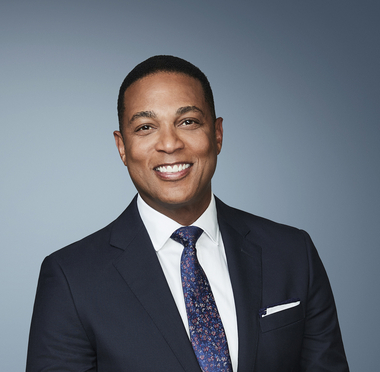
Don Lemon’s arrest is the ultimate suppression of the Fourth Estate
By Spencer Macnaughton
Uncloseted Media
This story was originally published by Uncloseted Media, an LGBTQ focused investigative news outlet.
At around midnight last Friday, former CNN anchor turned independent journalist Don Lemon was arrested in a hotel lobby in Beverly Hills. He says roughly a dozen federal agents took him into custody before he was released later that day on personal recognizance.
Lemon was arrested alongside three other people—including three-time Emmy Award-winning journalist Georgia Fort, who was taken from her home—for attending a protest at a church against a pastor who appears to be the acting director of Immigration and Customs Enforcement’s (ICE) St. Paul field office.
While Attorney General Pam Bondi says the journalists involved with the protest were committing a “coordinated attack on Cities Church,” Lemon maintains he was there exclusively for journalistic purposes. And video of Lemon’s reporting shows him following the steps any seasoned journalist would take at a protest: He records a few standups, interviews folks from both sides of the debate (including a pastor from the church), asks tough questions and identifies himself as a reporter.
After the arrests, there was widespread condemnation by nearly every credible journalistic organization, including the National Press Club, PEN America, the Committee to Protect Journalists, the Knight First Amendment Institute, the International Press Institute, Reporters Committee for Freedom of the Press, the National Association of Black Journalists and the Association of LGBTQ+ Journalists (NLGJA).
Despite this, Lemon’s arrest will have a chilling effect on journalism, whether or not we notice it. Since Trump 2.0, much of the mainstream media has become less trustworthy: Fox News, the most-watched cable network in the U.S., is seen as propaganda and right-wing advocacy by researchers and journalistic institutions alike. Centimillionaire Davis Ellison now owns CBS News, and his appointed editor-in-chief, Bari Weiss, has already spiked a 60 Minutes segment that was unfavorable to the Trump administration.
Similarly, Amazon billionaire and Washington Post owner Jeff Bezos reportedly stopped the publication from endorsing Kamala Harris for president and just this week directed a historic downsizing at the paper, laying off a third of its employees.
In addition, many other news outlets, including CNN, are both-sidesing news stories like the Alex Pretti killing as though Americans are stupid enough not to be able to watch a video and determine that a man was fatally shot 10 times in five seconds on a street in broad daylight.
The false equivalencies and kowtows to Trump—who has described Lemon as a “sleazebag,” “washup” and a “failed host” with “no viewers”—were already happening. But what’s nerve-wracking about Lemon and Fort’s arrests is that they were independent journalists who have represented a critical element of truth-telling in America. These journalists, much like Uncloseted Media, are largely immune to political and corporate interference.
So what can the government do if it’s unable to manipulate them with its wallet?
Arrest them.
And that’s what’s happening. In America. In 2026.
While Lemon says he “will not stop” reporting and a judge says the federal government lacked probable cause to arrest him, the unfortunate truth is that these arrests will affect journalism in America. These effects may not make headline news, but they will exist quietly: They’ll impact the stories that get greenlit in newsrooms, the sources editors choose. It will force us to question whether we should be so bold as to go after powerful institutions or bad actors. The bottom line is that the fear of retaliation stifles the ability to tell the truth.
Up until now, truth-telling has been the most meaningful part of reporting in a nation not run by a dictator.
But today, I’m afraid that that part of the American dream isn’t in the process of crumbling. It’s already shattered.
The Gayly editor’s note: The term Fourth Estate or fourth power refers to the press and news media in their explicit capacity, beyond the reporting of news, of wielding influence in politics.
The Gayly online. 2/5/26 @12:30 p.m. CST.