


LGBTQ History: Stonewall and the Judy Garland myth: its origins
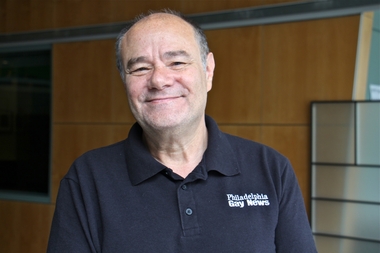
- by Mark Segal
Philadelphia Gay News
The myth that Judy Garland’s death caused the Stonewall riots is offensive to those of us who were there, and to those who spent the following year fighting every day to build the community we have today.
Stonewall was not a Hollywood musical. Nobody shouted, “Hey, let’s put on a show!”
It was a riot. It was violent. People were hurt. People were arrested. Windows were smashed. We were fighting back against police harassment, discrimination and a society that treated us as criminals simply for being who we were.
So how did this ridiculous story become part of our history? That question leads to a much larger one: Who has been allowed to write our history?
For decades, much of early LGBT history was told by straight journalists looking at us from the outside. Their newspaper articles became historical documents, and later historians naturally turned to those early reports when trying to reconstruct what happened.
But what happens when the original reporting itself is based on stereotypes? The Judy Garland myth offers a perfect example.
The earliest known appearances of the Garland explanation came in the Village Voice on July 10, 1969, less than two weeks after the riots, in a column by Walter Troy Spencer titled “Too Much, My Dear.”
Spencer attributed to a man named Dick Neuweiler the suggestion that the combination of the full moon and Judy Garland’s funeral had been “too much for them.” In the same piece, Spencer derisively referred to Stonewall as the “Great Faggot Rebellion.”
Think about that for a moment.
A community that had endured years of police raids, arrests, humiliation and violence finally fought back, and one of the earliest explanations reduced that rebellion to gay people becoming emotionally distraught over the death of a Hollywood star.
But there’s another question. Who was Dick Neuweiler?
Was he at Stonewall? Was he an activist? Was he a member of the Mattachine Society? Did he later join the Gay Liberation Front? Was he even an eyewitness?
No news organization or individual has ever found independent documentation establishing any of those things.
That does not prove that Neuweiler didn’t exist, nor does it prove that Spencer invented him. But it certainly raises a legitimate historical question: Why has an explanation attributed to someone whose connection to Stonewall remains dubious been repeated for more than half a century?
Where is the supporting evidence? Where are the eyewitnesses who said Judy Garland’s death caused them to riot?
I was there.
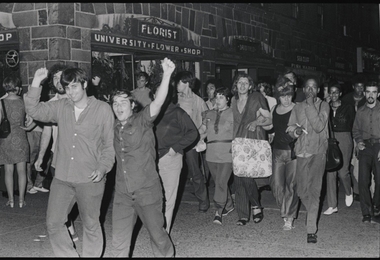
Nobody around me was talking about Judy Garland. We were talking about the police.
We were tired of being raided. Tired of being arrested. Tired of being humiliated. Tired of living in a society where simply being gay could cost you your job, your family and your freedom.
Yet once the Garland story appeared, it was repeated, then repeated again. Eventually repetition turned speculation into folklore, and folklore began masquerading as history.
There’s something particularly offensive about the stereotype behind it.
It transforms people fighting against oppression into caricatures of emotional gay men so distraught over Judy Garland that they suddenly took to the streets.
Stonewall wasn’t The Wizard of Oz. It was an uprising. And it didn’t end when the streets became quiet.
In the weeks and months that followed, many of us organized. We joined the Gay Liberation Front and other emerging organizations. We demonstrated. We created newspapers. We confronted institutions. We demanded visibility.
One year later, we marched through the streets of New York in what became the first Pride march.
We weren’t organizing memorials for Judy Garland. We were building a liberation movement.
Fortunately, LGBT people also began documenting our own history. Donn Teal’s The Gay Militants, published in 1971, recorded the emerging movement from much closer to the people creating it. Decades later, historian David Carter spent years researching Stonewall, interviewing participants and examining the historical record.
That is how we should approach our history: compare sources, question assumptions, and never assume something is true simply because it appeared in a newspaper first, not because it came from a member of our community.
And that brings us to something urgent. People who were at Stonewall are still alive. People who participated in the Gay Liberation Front, Gay Youth and other organizations that transformed a riot into a movement are still alive.
But our numbers grow smaller every year. Now is the time to record those voices.
We need oral histories. We need to preserve our documents and photographs. And historians need to examine the earliest reporting critically, recognizing that some of it was written by people who viewed us through the prejudices and stereotypes of their time.
Straight journalists should certainly be part of the historical record. But they should not be allowed to define our history simply because they had the printing presses.
For generations, other people told us who we were. We fought a revolution so we could define ourselves. We should do the same with our history.
Stonewall was not a story about gay people crying over Judy Garland. It was about people who had been pushed around for too long finally pushing back.
Those of us who were there know the difference. And while we’re still here, we’re going to make damn sure history knows it too.
MARK SEGAL: Is a Stonewall riot pioneer, early member of Gay Liberation Front and the author of “And Then I Danced, Traveling the Road to LGBT Equality,” which the National Lesbian & Gay Journalists Association named book of the year.
The Gayly online. 10/1/26 @ 7:06 p.m. CST.