


Eight trans inmates say the Bureau of Prisons is illegally denying them care
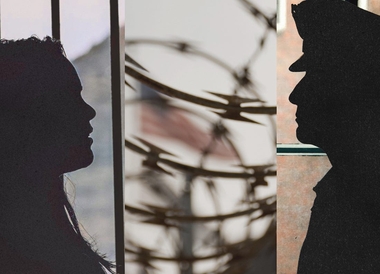
Last June, a judge ordered the BOP to restore gender-affirming accommodations for trans people after a Trump executive order. Legal filings and accounts suggest the agency isn’t complying.
- by Hope Pisoni
Uncloseted Media
This story was originally published by Uncloseted Media, an LGBTQ focused investigative news outlet.
On his first day back in office, President Trump signed Executive Order 14168, which contains several provisions rolling back trans rights, including a ban on the use of federal funds for gender-affirming health care in prisons. The following month, the Federal Bureau of Prisons (BOP) issued a memo outlining their compliance with the order and that they would be removing nearly all accommodations for trans people. This would include access to gender-affirming hormones, clothing and other items like razors and chest binders.
In March 2025, the American Civil Liberties Union and the Transgender Law Center (TLC) filed a lawsuit against the Trump administration over these restrictions, arguing they violate the Eighth Amendment’s protection against cruel and unusual punishment. In June, a federal judge granted the plaintiffs in the lawsuit, Kingdom v. Trump, a preliminary injunction, blocking the BOP from enforcing the order or its memo while the trial continues. The injunction remains in place while the lawsuit is ongoing.
However, eight current or formerly incarcerated trans people who spoke with Uncloseted Media testified to being denied or impeded in their access to some form of gender-affirming accommodation covered by the injunction. Additionally, a review of legal documents from Kingdom v. Trump and BOP Administrative Remedy forms reveals several reports of the bureau’s refusal to comply with the injunction, and plaintiffs’ counsel confirmed noncompliance at 19 different prisons.
“The fact that they are refusing to comply with the injunction at facilities all around the country is deeply concerning,” says Megan Noor, a staff attorney at TLC who is working on the case.
“I’ve been trying to fight in the ways I know how, which is to utilize the courts, and to make sure that the fourth estate knows what’s going on inside these prisons,” Grace Pinson, a trans woman incarcerated at Federal Correctional Institution (FCI) Butner in North Carolina, told Uncloseted Media.
Denied Health Care: Some trans people have been denied access to their hormone replacement therapy (HRT) for months at a time. In a declaration to the court in Kingdom v. Trump, Rebecca-James Meskill, who is incarcerated at FCI Talladega in Alabama, says she was taken off hormones due to the executive order and did not receive them again until six months after the injunction was issued. During that time, she says she frequently broke out in hives, and the dysphoria about her thickening body hair caused her to scratch her arms to the point of scarring.
“Being off of hormone therapy has left me feeling diminished in every aspect of life,” Meskill wrote in her declaration. “My body has started re-masculinizing, and my body hair is growing thicker and faster—all of which makes me feel hopeless and like I need to avoid people.”
Benjamin Wills, a trans man who had been on hormones for nine years prior to his incarceration in December 2024, was not provided with a prescription by the BOP until four months after the preliminary injunction went into effect. The class counsel in Kingdom v. Trump also alleges that at least one trans woman continues to be denied access to hormones, though the BOP disputes these claims.
Valerie Simpkins, who, like the rest of the trans women we spoke to, is housed at a men’s prison, says that she was denied hormones for months after the injunction at FCI Butner and wasn’t able to get back on them until she was transferred to a different prison.
“You honestly feel like you’re going crazy,” Simpkins—who has been incarcerated since 2013 for child porn charges—told Uncloseted Media. “You’re constantly snapping on people. … You really feel like you’re losing your mind, because I had been on it for close to 11 years, and then they just take you off.”
For those who’ve remained on hormones, treatment has been interrupted. Karessa-Rose Hernandez, incarcerated for charges on multiple counts of bank robbery, had previously been prescribed injections of estrogen. But when her treatment was restored in July at the United States Penitentiary (USP) Tucson in Arizona, staff switched her onto patches, which have a much lower dose of the hormone. She says this caused her estrogen levels to plummet, and she began to develop rashes from the patches.
“They took me off [the shot], I never saw a doctor to do it, they never explained to me why they were doing it,” she told Uncloseted Media.
Denied Accommodations: While many are still able to access their hormones, other accommodations are being denied. Pinson, a prolific jailhouse lawyer serving time for mailing a death threat to President George W. Bush in 2007, has been held since October at the Maryland Annex, a unit at FCI Butner with stricter security and harsher conditions. While there, she says she’s been denied access to makeup, feminine undergarments, and items for shaving her face and body. In a legal declaration, she testified that the gender dysphoria this has caused has led to thoughts of self-castration.
“I have been in a really bad place,” Pinson told Uncloseted Media. “I just want to go home and be done with all this so bad.”
According to BOP records from July obtained by The Remedy Project, a prisoner advocacy nonprofit, Pinson alleged that Butner Warden David Rich made it “crystal clear” that he “believe[s] that [the preliminary injunction] will be overturned by a higher court … and until then, nothing will be changing.” Rich, who is no longer employed at Butner, did not immediately respond to a request for comment.
“He told me he would not be following [the injunction] at all because that is what he believed was going to happen. Trump would appeal and win,” Pinson says. “He told me flat out, he and his staff would be ignoring the injunction from Judge Lamberth in the Kingdom case and even to this day they are still ignoring it.”
Similarly, Shay Gladney, a trans woman incarcerated at USP Coleman in Florida, told Uncloseted Media that “nothing has changed” for her since the injunction. She’s been unable to get a new set of undergarments in the past year, and while staff let her place a special purchase order (SPO) for them, along with makeup and other products, last summer, she says they still haven’t arrived.
“They keep saying ‘just be patient, be patient,’ and I just gave up,” Gladney says.
Uncloseted Media reviewed legal declarations from five individuals, including Pinson and Simpkins, stating that their respective prisons denied them access to most or all gender-affirming items, which they had been able to access prior to the executive order. The BOP has disputed two of these claims.
“[It feels] shitty, seeing as how every other person can get their needs met but us,” says Mya Dye, a trans woman who was released from FCI Butner in January. “Because you can’t take care of yourself how you want to, and then when you’re going through [dysphoria], it’s worse because it’s a mental thing. [Getting] stressed out about wearing a beard and all that type of shit.”
The injunction also maintains a BOP rule that allows trans women to be issued cards that exempt them from pat searches by male guards. Still, plaintiffs’ counsel in Kingdom v. Trump identified three individuals who reported that prison staff had taken their cards away.
Kendall Walker said in a declaration that the prison took her card away in September once she was transferred to USP Florence in Colorado. She says staff told her, “We do things our way here. We don’t give those out.” The BOP says they have no records of any of these women requesting exemption cards.
Pinson says when she pressed staff members at Butner on their noncompliance with the injunction, several said they were simply following the BOP’s policies, which govern the rules and regulations prison staff must follow. After Trump’s executive order, the BOP updated many of its policies to remove mentions of and protections for trans prisoners.
But none of these rules have been reversed following the injunction, meaning that all the anti-trans policies blocked by the judge remain on the books.
“The judge ordered BOP to continue providing hormone therapy and social accommodations,” Noor says. “To the extent BOP staff are refusing to do so, that itself is a violation of the injunction.”
“When you go back and forth with these officers, they will say, ‘Well, until they change the policy back, I’m not gonna follow the portions that have been deleted,’” Pinson says.
Uncloseted Media obtained a copy of a new BOP policy dated Feb. 19, 2026, titled “Management of Inmates with Gender Dysphoria.” The policy introduces a process to “develop a tapering plan that includes … discontinuation of the hormone intervention” for individuals already receiving treatment. It reaffirms the denial of social accommodations and new HRT prescriptions. It also states, “The Bureau will comply with this Executive Order [14168] unless compliance … is prohibited by a court injunction or court order.”
Malicious Compliance: Even when prison staff respect the injunction, they often do so in ways that still impede prisoners’ access. While BOP policy used to require prisons to stock gender-affirming items at their commissary, some are now only offering them via an SPO. Several people report waiting months for SPOs to arrive, and some have not received all the items they ordered.
Dye says that she attempted to put in an order for feminine deodorant and a sports bra about a month before she was released, but was denied because staff said “that bullshit won’t make it here before you leave.” And Autumn Harris, another trans woman at FCI Butner, told Uncloseted Media that she waited over a month for staff to process an SPO for gender-affirming items.
By contrast, she says that when she submitted an SPO for religious materials related to her Christian faith, the order was processed in three days. And Alyssa Gillette, a trans woman serving time at FCI Butner for charges of illegal firearm ownership, says she had to wait two months for a set of women’s undergarments.
“I’ve got a pair of titties, I wear bras and panties, and if I’ve gotta get changed out there, there’s a bunch of grown men who automatically don’t respect us or wanna stare at us,” Gillette says. “What woman wants to go through that every day?”
In another case, Simpkins, Dye and Nikki Goodall, another trans woman at FCI Butner, say they were given access to female undergarments but only in one size, which did not fit any of the trans women at the facility. The BOP says it was unable to find any record of Dye requesting or purchasing female undergarments.
Retaliation: Many trans women say that when they try to advocate for themselves or reach out to the media about these violations, they are met with retaliation.
Pinson, who has won multiple cases against the BOP and provided legal assistance to over 20 prisoners—including other trans women impacted by the executive order—says she has a target on her back.
She was assaulted by staff in October, where they broke her arm, cut the clothes off her body, walked her down the hallway naked, and left her in restraints around her torso, wrists and legs for 10 hours. Simpkins and Dye both say they witnessed this assault. The BOP confirmed that the altercation took place but claimed it was not in retaliation for Pinson’s advocacy and that she sustained “minor injuries.”
During this, she says she was told by a prison official: “Don’t play the victim, I know what you’ve been writing to that judge in D.C. You did the crime and put yourself here. You know you were born with a penis and would be put in a male prison. The judge doesn’t run this prison, I run this prison.” The official in question did not immediately respond to a request for comment.
“As long as she’s in there, I’m worried that she’s not gonna come out alive,” Debra Pinson, Grace’s mother, told Uncloseted Media on a phone call from her car in Oklahoma.
Dye, who was Pinson’s cellmate, says prison staff threatened to delay both of their release dates. She says staff would try to dissuade her from filing grievances against the prison, saying things like, “You need to stop filing, don’t you want to go home?” Dye was scheduled to be released on Thanksgiving and planned to spend the holiday with her mother. But seven days before her release, staff pushed it back to Jan. 7, causing her to miss the entire holiday season.
“We were gonna, when I came home, go out and stay at a hotel and do something. … She had booked rooms, but then she had to cancel,” Dye says. “It just sucked. Them having that much control over you is something that you can’t get used to.”
According to BOP documents obtained by The Remedy Project, Pinson was scheduled to be moved to a halfway house in November 2025. But according to her legal declaration, prison staff delayed her release because of her advocacy. Now, the BOP says she won’t be getting out until January 2027. The documents also state that prison staff confiscated over $2,000 worth of her personal property following the injunction, “including authorized items such as stamps, pens, and paper.”
“These people are treating me like I’m the mastermind of some kind of fucking criminal organization simply because other inmates are backing up the things I’ve been saying, and it’s the most ridiculous bunch of bullshit I’ve ever seen,” Pinson says.
In a court hearing on Feb. 19, an attorney for the BOP claimed that there was “no evidence” of retaliation of this kind. The judge and plaintiffs alike challenged this statement by pointing to Pinson’s declaration.
“They didn’t bring anything to controvert that,” Noor says.
Cut Off from Media: In other cases, prison staff have impeded trans people from talking with the media about their mistreatment. On July 18, 2025, Uncloseted Media submitted a formal request for a news media interview with Hernandez to the prison. After following up five times over a month, USP Tucson’s warden denied the request, writing in an email that “the interview would probably cause serious unrest or disturb the good order of the institution.” Hernandez told Uncloseted Media that an associate warden (AW) told her that if she provided an interview to us or any other media outlet, she would be sent to a more restrictive unit. She says the AW said that “if you do it, every other transgender’s gonna want to do it.”
“I am afraid to call you and just talk,” Hernandez wrote in an email the day after being threatened by the AW.
Uncloseted Media also attempted to contact Gladney—who is unable to access the BOP’s messaging system due to having been prosecuted for internet-related sex crimes—by passing our phone number via her sister, Katrina Griffin.
Gladney’s cellmate says that after receiving a letter with Uncloseted Media’s contact information, Gladney suddenly became unable to add anyone to her call list.
“She’s dying to speak with you, and they’re gonna try to do everything in their power to stop it. They do it every single time,” Griffin told Uncloseted Media.
Gillette and Gladney also say that prison staff have failed to provide them with Administrative Remedy forms, which are the paperwork required to file formal grievances with the BOP.
Despite this retaliation, Gillette, along with several other trans inmates, says they plan to continue fighting to get their stories to the outside world in order to hold the BOP accountable.
“These people need to be exposed for the things they’re doing, because not everybody’s standing up, but I’m standing up to them,” Gillette says. “I should be like everybody else. … I shouldn’t have to deal with constant harassment.”
Response from the Federal Bureau of Prisons: “We do not address allegations, and for privacy, safety, and security reasons, the Federal Bureau of Prisons (BOP) does not discuss the conditions of confinement for any individual in its custody. Additionally, the BOP does not comment on matters related to pending litigation or ongoing legal proceedings.
The mission of the BOP is to operate facilities that are safe, secure, and humane. We take seriously our duty to protect the individuals entrusted to our care and to maintain the safety of our employees and the community. Humane treatment of the men and women in our custody is a top priority.” — Scott Taylor, Office of Public Affairs for the BOP.
Uncloseted Media received identical responses from FCI Butner and USP Florence. All other facilities mentioned in this story did not respond to requests for comment.
The Gayly online. 2/21/26 @ 5:27 p.m. CST.