


We have always been here: More Two-Spirit ancestors
- by Brian Eckberg
Two Spirit Columnist
All Nations Two Spirit Society
Much of our Indigenous history has been lost to time. The carnage of colonization and attempts to eradicate our cultures have had significant impacts on the passing down of knowledge, which was traditionally in oral, not written, form. Despite this, we are still here. And some of our stories endure.
Two-Spirit is a new term, but an ancient understanding. Here are just a few more of our ancestors, whose stories somehow survived to inspire future generations:
Kuilix (Pend d’Oreille or Kalispel) c. 1810s-1880s - Kuilix was a 19th-century Kalispel (Montana) warrior, whose name means “Red Shirt” or “Red One”, a reference to a British uniform coat she wore. Kuilix was known to dress partially in men’s clothing and was the first into battle against a large party of Blackfeet in 1842.

In 1846, they led a fight against the Crow, wielding only an axe, which is illustrated in the sketch. The caption reads: “A woman warrior’s swift about-face left the enemy stupefied.” Renowned for being nurturing and fearless, Kuilix was said to have survived into old age.
Lozen & Dahteste (Chihenne Chiricahua Apache & Mescalero Apache) c. 1840-1889 & c. 1860-1955: Lozen was the sister of Geronimo’s right-hand man, Victorio. She was among the fiercest warriors, a medicine woman gifted with powerful visions. After her brother was killed in 1880, a distraught Lozen exacted her revenge on the U.S. Army in true warrior fashion: returning to the warpath quickly, purposefully and with deadly results.
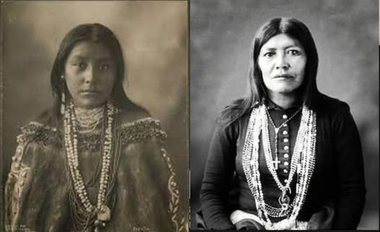
Her “battle buddy” was a scout, messenger and mediator called Dahteste, who was always nearby. She was married and fought alongside her husband, but her “battle buddy,” Lozen, was always nearby.
After the surrender of Geronimo and his people, Lozen died of tuberculosis in 1889, while imprisoned in Alabama. Dahteste spent eight years as a prisoner of war at Fort Marion and 19 years at Fort Sill, Oklahoma.
Upon her release, she relocated to Whitetail on the Mescalero Apache Reservation in New Mexico. Often seen in full regalia, she owned many sheep (a sign of wealth) and died peacefully in 1955 at the age of 95. Til her death, she mourned the loss of her love, Lozen.
Buffalo Calf Road Woman (Northern Cheyenne) c. 1844-1879: Also known as Brave Woman, Buffalo Calf Road Woman is most famous for charging into a shower of bullets to rescue their brother (Comes In Sight) during the Battle Of The Rosebud. Nine days later, Buffalo Calf Road Woman fought alongside her spouse in the Battle Of The Little Bighorn, where Northern Cheyenne storytellers credited her with having struck the blow that knocked Lieutenant Colonel George Armstrong Custer off his horse before he was killed.
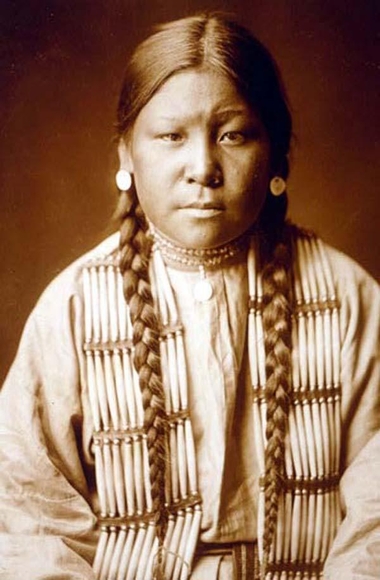
Alternate gender roles for females existed among the Cheyenne and were called hetanemane’o. These women joined war parties, participated in councils of men, and often dressed for battle as men would—naked except for a breechcloth.
It is especially important that we share our history and demonstrate our ancient presence. If you’d like to learn more about Two-Spirit ancestors, check the June 2026 issue of The Gayly for 3 more examples of our IndigiQueer heroes.
Thanks for reading & Wado!
The Gayly online. 8/31/26 @ 1:03 p.m. CST.