


Why food prices keep rising and who pays the highest price
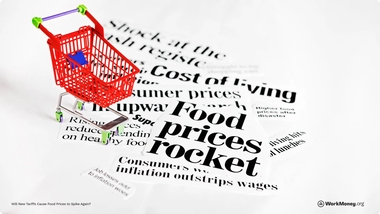
As grocery bills continue to strain household budgets, consumers are making difficult tradeoffs about where they shop, what they buy, and how they maintain healthy diets.
Food inflation and higher grocery prices continue to affect families across income levels. Still, the burden falls disproportionately on lower-income households, who spend a larger share of their income on food. As shoppers look for ways to stretch their budgets, they’re changing where they shop, shifting purchases between food categories, and seeking greater value without sacrificing nutrition.
Experts from the Gerald J. and Dorothy R. Friedman School of Nutrition Science and Policy at Tufts University offer insight into who bears the greatest burden of rising food costs, what practical strategies can help families make nutritious choices despite budget constraints, and why certain foods are seeing higher price increases than others.
Sean Cash, PhD, Associate Professor and Bergstrom Foundation Professor in Global Nutrition, whose expertise includes food policy, consumer behavior and the economic and environmental impacts of food system interventions, shared these insights.
“When food prices rise, consumers don’t simply stop buying food,” said Cash. “They become more strategic. Many households are shopping across multiple retailers, using discount outlets such as dollar stores for lower-cost packaged foods while balancing those purchases with healthier items elsewhere. The challenge for families is finding ways to maintain diet quality while managing tighter budgets.”
Cash discusses how higher prices change where people shop, which food categories are most likely to see changes in consumer demand and how consumers can make healthy choices despite budget constraints.
Cash added, “As prices increase, consumers can buy less, change where they shop, or change what they buy at the places they shop – or do all three. Understanding how shoppers adapt can help us better support healthy eating during periods of economic pressure.”
Professor William Masters, PhD, said, “One of the biggest misconceptions about healthy eating is that nutritious diets always require expensive specialty foods,” Masters said. “In reality, some of the best nutritional value per dollar comes from basic foods such as legumes, dairy products, fruits, vegetables, eggs, and other nutrient-rich staples that can be combined into a healthy diet at relatively low cost.”
Masters expertise is in food economics and global food systems. His projects on Food Prices for Nutrition and the cost and affordability of healthy diets introduced new metrics of food access worldwide. Masters speaks to which healthy foods deliver the best nutritional value per dollar and common misconceptions about eating healthy on a budget.
Masters added, “Our research shows that billions of people around the world still cannot afford a healthy diet, even when choosing the least expensive nutritious foods available. Rising food prices make that challenge even more severe because households often have to choose between meeting nutritional needs and covering other essential expenses.
“The long-term solution is not only helping families afford healthy foods today, but also making nutritious foods easier and less costly to produce, distribute, and purchase in every community.”
Masters also said, “The encouraging news is that we now have better tools than ever to measure the cost of healthy diets. Those data can help guide policies and investments that bring nutritious foods within reach for more people.”
Parke Wilde, PhD, a professor with expertise in the economics of federal nutrition programs, said,
“Rising food prices hit especially hard for families that have lost their nutrition assistance benefits,” said Wilde. “Supplemental Nutrition Assistance Program (SNAP) benefits are adjusted annually for inflation, but non-participants are unprotected from inflation. Since passage of the One Big Beautiful Bill (H.R. 1) in 2025, millions of SNAP participants have lost their benefits. This affects food retailers, farmers, food banks, and community organizations, just when they also are struggling with rising costs.”
Wilde also said higher food prices, combined with changes enacted through the One Big Beautiful Bill, are affecting consumers and food system stakeholders.
Wilde added that “Food system stakeholders are interconnected. When economic pressures on households increase, the effects ripple throughout the entire food system, from producers and retailers to the programs and institutions working to address food insecurity.”
Tufts University for Newswise via The Gayly online. 10/13/26 @ 6:52 p.m. CST.