


SNAP was always there…until it wasn’t.
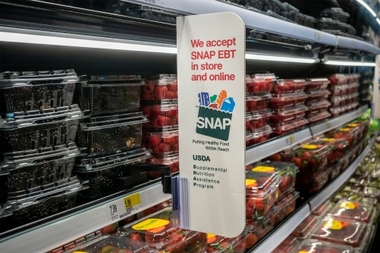
During the 43-day federal government shutdown, Supplemental Nutrition Assistance Program (SNAP) benefits were withheld for two weeks in early November. This shutdown was the first time in the program’s history that the benefits—designed to safeguard Americans against catastrophic hunger—were inaccessible.
“This is the first time in modern history that benefits have actually been withheld, despite USDA having a contingency fund available to pay benefits during the shutdown,” said Benjamin Chrisinger, assistant professor in the departments of Community Health and Urban and Environmental Policy and Planning.
The disruption impacted not only the millions of Americans who rely on the program to help pay for groceries but also food retailers and community-based food assistance programs.
Though benefits resumed when the government reopened on November 14, the interruption—on top of new work requirements for SNAP recipients and state restrictions on what foods qualify for the program—raised questions about the program’s future.
What ramifications does this interruption have on the program? Could the Supreme Court’s SNAP rulings have repercussions for food security? And should states limit what types of foods SNAP recipients can purchase?
Tufts Now spoke with Benjamin Chrisinger, an assistant professor in the departments of Community Health and Urban and Environmental Policy and Planning, who has conducted extensive research on the efficacy of food assistance programs.
How damaging was the period without SNAP benefits to the program at large? Are the impacts still felt now that benefits have resumed?
Besides the obvious harms to participants—both in terms of added worry and increased food insecurity—it’s too soon to know the program’s broader impacts. States undoubtedly incurred additional administrative costs in responding to rapidly changing and conflicting information from the courts and USDA. And it’s quite possible that some food retailers suffered significant losses in the first half of November.
Some states successfully distributed SNAP benefits during the shutdown. Why was this able to happen? How does that situation vary by state?
Most states that paid full or partial benefits during the shutdown did so immediately following a court order or revised guidance from USDA. When the USDA required states to calculate reduced SNAP payments (with some households receiving no benefits at all), this added a further logistical complication.
Even after states resumed payments, they were sometimes interrupted by a conflicting court order or revised USDA guidance, leaving benefits distributed to only a portion of households.
Some states also used their own discretionary or emergency funds to cover the gap in November benefits. In some cases, states repurposed Temporary Assistance for Needy Families funds, but they could only be used for households with children.
Many states also provided emergency funds to regional food banks to help them address increased demand.
What do the recent Supreme Court rulings on SNAP signify—if anything—about the future of the program?
The Court’s willingness to allow SNAP to be withheld raises serious questions. This is the first time in modern history that benefits have been withheld, despite the USDA having a contingency fund to pay benefits during the shutdown.
A key feature of SNAP has been its consistency, which allows households to plan and budget and reduces their worries about having enough to eat. The Supreme Court’s rulings seem to cast doubt on the program’s future consistency.
There are movements in some states to restrict the types of food that can be purchased with SNAP (e.g., high-calorie sodas, highly processed foods). Are you in favor of those proposals? Why or why not?
There are a variety of ethical arguments against making SNAP more restrictive, including issues of fairness for low-income households that already have limited options.
SNAP is already an unusual approach to food security compared to other countries; many view unrestricted cash transfers as more efficient. Cash transfers let households prioritize needs, which might be food, medical expenses, utilities, or even a child’s birthday.
Historically, the program’s direct link between low-income households and food retailers and producers has given it some political protection. However, the shutdown shows how this is not always the case.
We can’t forget the bigger picture: The One Big Beautiful Bill massively reduced SNAP funding and imposed stricter work requirements. So SNAP is already becoming less generous and less inclusive. To me, that’s the main health problem, and that’s where we should focus.
The program is already remarkably good at achieving its primary goal of preventing hunger. If the goal is to improve Americans’ nutrition, then population-level policies such as nutritional standards for added sugars and sodium would create a healthier food system for everyone.
By Tufts University for Newswise via The Gayly online. 01/07/26 @ 11:39 a.m. CST.