


Dr. King was vital in the fight for LGBTQ+ rights
- by Robin Dorner
OpEd
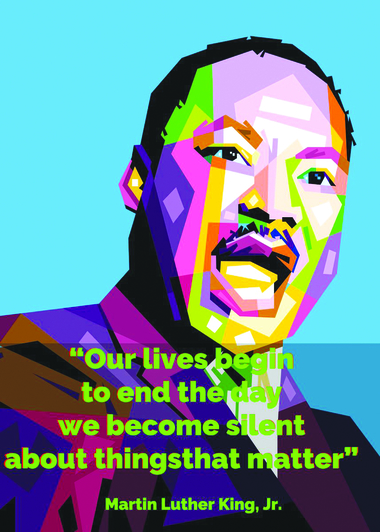
One of my favorite quotes by Dr. Martin Luther King, Jr. is the one pictured on this month’s front page. “Our lives begin to end the day we become silent about things that matter.”
If you know me, you know that few people refer to me as silent. More than 30 years ago, I began my role in fighting for the rights of LGBTQ+ people. Why? It was the right thing to do. It was the late 80s, and, as an RN, I worked with people living with AIDS. I was a home IV nurse, and I watched people suffering as their rights were trampled.
We cannot be silent about things that matter. The issue of abortion rights is covered in this issue (page 21) by Dustin Woods, our Visionary Columnist. There is currently a threat that women will lose the right to make certain choices about their bodies. Regardless of what you think of someone’s “choice,” we cannot lose that right to choose just like we can not lose our right to love who we love.
These are the civil rights Dr. King fought for, not to mention his excellent public speaking and motivational skills. I pulled many quotes from Dr. King for this issue, and it was hard to choose which ones to use. There are so many profound quotes. If we all lived according to these words, this would be a far different world we live in.
And I can’t write a column about Dr. King and LGBTQ+ rights without mentioning Bayard Rustin. Rustin was a gay man, and due to criticism over his sexuality, he usually acted behind the scenes as an influential adviser to civil-rights leaders, including Dr. King.
I remember being at a conference in about 2007 when Rob Howard explained much about Rustin to a group of people, myself included. Howard later became the Associate Editor here at The Gayly.
We have written about Rustin many times in The Gayly. Rustin also worked on the March on Washington Movement in 1941 to end racial discrimination in employment. He later organized Freedom Rides.
Rustin worked alongside Ella Baker, a co-director of the Crusade for Citizenship, in 1954. Before the Montgomery bus boycott, he helped organize “In Friendship” amongst Baker, George Lawrence, Stanley Levison of the American Jewish Congress, and other labor leaders. “In Friendship” provided material and legal assistance to those evicted from their tenant farms and households in Clarendon County, Yazoo, and other places.
Rustin became the head of the AFL–CIO’s A. Philip Randolph Institute, which promoted the integration of formerly all-white unions and promoted the unionization of African Americans.
During the 1970s and 1980s, Rustin served on numerous humanitarian missions, including aiding refugees from Communist Vietnam and Cambodia. He became a public advocate for gay causes, speaking at events as an activist and supporter of human rights. At the time of his death in 1987, he was on a humanitarian mission in Haiti.
The point I’m trying to drive home is that it takes many people to create change. Get out there and work to make it happen. Being an “armchair quarterback” is simply not acceptable when it comes to civil rights.
The Gayly online. 01/19/26 @ 3:00 p.m. CST.