


Who was Ryan White?
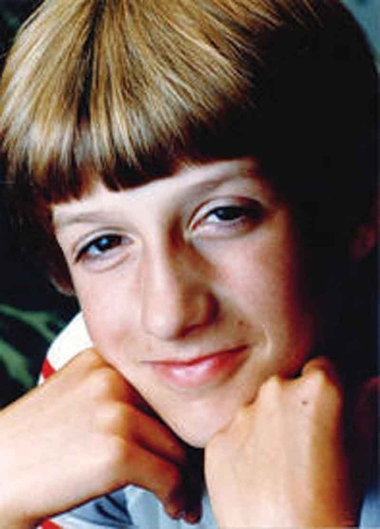
- by Robin Dorner
Editor in Chief
Recently, a friend of mine mentioned Ryan White and said, “You know, these 25-year-olds don’t even know who Ryan White was. So, I began asking many “25-year-olds” about Ryan White, and I got some interesting comments.
“Wasn’t he the guy in Nebraska who was killed?” asked one young person of that age (I think she was thinking of Wyoming). Another said, “I’m clueless. Who was he?”
I asked quite a few more younger adults, and I basically got the same answer.
However, the best comment came from Emma, a former employee who said, “Ryan White…I do not know. Was he a part of gay history?” When I told her who Ryan White was, she replied with, “This is why we need more [AIDS] education in school.”
Emma made a profound statement not just because Ryan White was very instrumental in the HIV/AIDS movement, but also because the statistics for newly diagnosed youth are staggering.
In 2022, youth aged 13–24 accounted for 20 percent (6,400) of the estimated 31,800 new HIV infections in the U.S. and dependent areas. While this demographic accounts for about 19–20 percent of new diagnoses, new infections in this age group dropped by 30 percent between 2018 and 2022.
Despite progress, approximately 50 percent of youth with HIV are unaware of their status, which is the highest rate among all age groups.
Yeah, looks like we need more education.
So who was Ryan White? Ryan was one of the first children with hemophilia to be diagnosed with AIDS. He was diagnosed on December 17, 1984, and it was a time when there was no education, and there was hardly any information on HIV or AIDS.
At that time, of course, there were few precautions at the hospital. And suddenly the CDC shows up and starts putting in all kinds of precautions, you know: the gloves, the gowns, the masks and so forth, and starts talking to the nurses and enforcing “precautions.” It became apparent almost overnight, and suddenly things were different.
I was one of those nurses during that time and scared to death of the virus. Back in the day, the disease was called GRID (Gay Related Immune Deficiency). That was before we knew it was a virus and knew little about it.
So how could this young kid with hemophilia have AIDS?
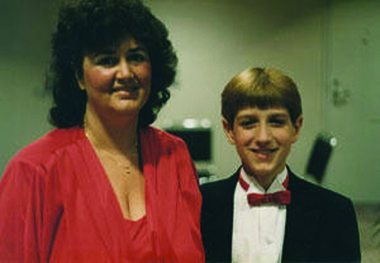
And then we learned (see “need for education” above). We learned about transmission, bloodborne pathogens, and universal precautions… we educated ourselves. Then it made clear sense how this young boy had contracted AIDS.
When Ryan was diagnosed at age 13, he was given only 3-6 months to live. At that time, his mother worried about every cough, every fever; worried it would be his last. But when he started getting stronger, he wanted to go to school.
His mother, Jeanne White Ginder, remembers, “It was really bad. People were really cruel; people said that he had to be gay, that he had to have done something bad or wrong, or he wouldn’t have had it. It was God’s punishment; we heard the ‘God’s punishment’ a lot. That somehow, some way, he had done something he shouldn’t have done, or he wouldn’t have gotten AIDS.” (quotes from hrsa.gov)
The White’s had to go through court hearings so that Ryan could go back to school.
Elton John and White developed a strong relationship as John learned of this family and their struggle. John described the bullying, violence and discrimination the teen, his family and their supporters experienced in his book, Love Is The Cure: On Life, Loss and the End of AIDS.
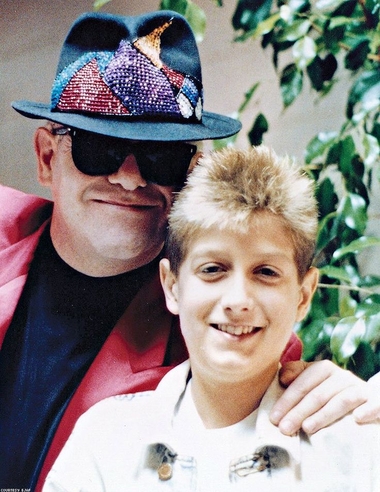
“When the Whites went out to eat, restaurants threw away dishes they used,” wrote John. “The parents of Ryan’s girlfriend forbade her from seeing him.
“Tires were slashed on [mother] Jeanne’s car,” John continues. “A bullet was shot through a window of their house. When the local paper supported Ryan’s right to attend school, the publisher’s house was egged, and a reporter received death threats.”
Ryan fought AIDS-related discrimination in his community along with his mother, Jeanne. Ryan rallied for his right to attend school - gaining national attention - and became the face of public education about his disease. Surprising his doctors, Ryan White would live five years longer than predicted.
He died in April 1990, one month before his high school graduation and only months before Congress, in August 1990, passed the legislation bearing his name - the Ryan White Comprehensive AIDS Resources Emergency (CARE) Act.
Ryan White’s legacy is and always will be that people are receiving better quality HIV care and living longer with HIV due to the Ryan White CARE Act.
That’s who Ryan White was.
The Gayly online. 3/4/2026 @ 12:21 p.m. CST.