


U.S. Gay Caucus announces legislation to end LGBT discrimination
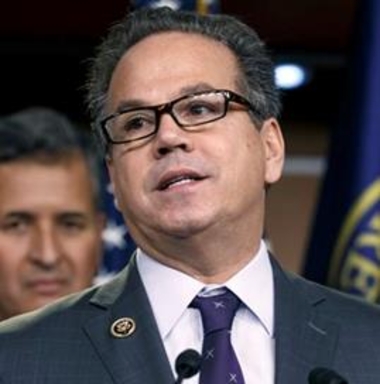
Rep. Cicilline requested co-sponsors for his Equality Act bill
by Robin Dorner
Editor in Chief
In March, U.S. Congressman David N. Cicilline (D-RI), a co-chair of the LGBT Equality Caucus and one of six openly gay members of the U.S. House of Representatives, announced upcoming plans to present legislation to end LGBT Discrimination.
‘So be written; so shall be done’ - Cicilline along with other House Democrats introduced a comprehensive LGBT rights bill to the U.S. Congress in July.
“America was founded, in part, on the idea that everyone should be treated equally and able to live their lives free from the fear of discrimination,” said Cicilline. Recent events around the country have highlighted that this is not the reality for all Americans. The new law enacted by the State of Indiana [earlier this year] is completely contrary to these core American values and offers compelling evidence of the need for Federal protections to protect the rights of LGBT Americans.”
Last year, Cicilline introduced a bill to protect basic Human Rights of the International LGBT Community.
“I am proud to be working with Senator Jeff Merkley, in coordination with members of the LGBT community, and my colleagues in the House, on a comprehensive civil rights bill that will ensure LGBT individuals are afforded the same protections against discrimination as every other American,” added Cicilline in comments on a press statement from his website. “I am hopeful that Congress will recognize, as a majority of the American people have, that this issue is about fundamental human rights and transcends politics. I look forward to continuing this work to ensure that all American citizens can live their lives free from discrimination and intolerance.”
There are several ways this legislation could impact LGBT citizens as highlighted here in a report from Eric Rosswood of The New Civil Rights Movement:
Credit: Currently, creditworthy people can be refused loans, leases, and/or credit cards if a lender wants to discriminate against the applicant’s sexual orientation or gender identity. LGBT citizens are not protected in the 1974 Equal Credit Opportunity Act.
Education: Currently, federal law prohibits discrimination in education on the basis of race, color, religion, national origin, sex, and disability; however there are no explicit federal protections for students based on sexual orientation or gender identity. The new bill would stop schools that discriminate against the LGBT community from receiving million-dollar tax credits from the federal government.
Employment: As quoted by Troy Stevenson, Freedom Oklahoma, Rep. Cicilline and many more, “A same-sex couple can get married one day and get fired the next just for getting married to the person they love.” There are 29 states that don’t have laws explicitly prohibiting discrimination based on sexual orientation, and 32 states don’t have laws explicitly prohibiting discrimination based on gender identity. This bill would ban employment discrimination based on sexual orientation and gender identity.
Housing: The Fair Housing Act (FHA) does not currently protect LGBT citizens. This new bill would ban discrimination in housing based on sexual orientation and gender identity.
Jury Duty: Jury selection process allows for discrimination based on sexual orientation and gender identity. That’s one of the reasons this bill is so important. There are currently no explicit federal protections based on sexual orientation or gender identity for jury discrimination. For example, in the case SKB v. Abbott Laboratories, a lawyer used his first peremptory challenge to strike a prospective juror in an HIV related case because the prospective juror was a gay man.
Federal monies: The majority of federal programs do not have explicit prohibition against discrimination based on sexual orientation or gender identity. (i.e. job training programs run by welfare benefit providers, hospitals receiving Medicare and Medicaid, foster care and adoption agencies, police and justice programs, and more.)
Business services: Whether it’s a baker that doesn’t want to provide a wedding cake to a same-sex couple, or a florist that doesn’t want to make the couple’s bouquet, companies are using religion as an excuse to refuse service to LGBT people. HRC reports 23 percent of LGBT people had received poor service in a restaurant, hotel or place of business because of their sexual orientation or gender identity, and 53 percent of transgender people reported experiencing verbal harassment and bullying in public spaces.
Rosswood concluded his New Civil Rights story with, “The Equality Act could significantly impact the lives of many LGBT Americans. Ironically, its introduction coincides with a committee vote on a Republican-backed bill to ‘protect’ people and organizations that disagree with same-sex marriage.”
The Gayly – August 4, 2015 @ 12:15am.