


Supreme Court flicks at First Amendment concerns with state’s subpoena of faith-based pregnancy centers
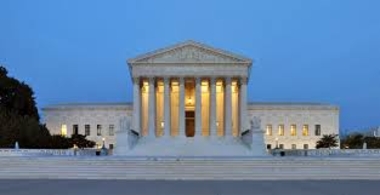
A majority of the Supreme Court appeared skeptical Tuesday of New Jersey’s effort to subpoena donor information from “crisis pregnancy centers” without federal court review, fearing that the probe may have chilled the First Amendment rights of anti-abortion supporters.
The justices appeared likely to side with a religious nonprofit, First Choice Women’s Resource Centers – a decision that would allow the group to fight the state’s subpoena in federal court. Much of the roughly 90-minute oral argument focused on how far that decision might reach to similar subpoenas.
At a time when red and blue states are often pursuing radically different policies on abortion, immigration and LGBTQ rights, the religious nonprofit framed its inability to get into federal court as a threat to both liberal and conservative groups that state officials could target. Some justices also had that concern.
New Jersey Attorney General Matthew Platkin, a Democrat, subpoenaed the centers in 2023 as part of an investigation into whether the nonprofit violated consumer fraud laws. Pregnancy centers are opposed to abortion, but state officials said their marketing may have left some patients with the impression that they could receive abortions at the facilities.
Justice Clarence Thomas, a member of the court’s conservative wing, repeatedly pressed New Jersey’s attorney to explain why the state targeted the religious centers in the first place. That line of questioning was designed to get New Jersey to acknowledge that the state had not received specific complaints about First Choice.
“You had no basis to think that they were deceiving any of their contributors?” Thomas asked.
Sundeep Iyer, representing the state, disagreed with that characterization and said New Jersey had “carefully canvassed all of the public information” on a website created by the group to solicit donations.
Issuing a subpoena based on that, Thomas said, “just seems to be a burdensome way to find out if someone had a confusing website.”
The subpoena was aimed at evaluating whether the centers “or their staff engaged in misrepresentations and other prohibited conduct,” according to the state. Platkin’s concern is that unsuspecting residents may have believed the centers were offering abortion when, in fact, they are designed to turn people away from that procedure. The state sought advertisements, donor solicitations and the identification of licensed medical personnel.
Though the centers filed the appeal and so is loosely connected to the abortion debate, the case in fact touches on a different legal dispute over the power state officials have to investigate, and the federal courts’ ability to intervene.
First Choice says federal courts should be able to review those subpoenas at an early stage, particularly when they might involve First Amendment violations.
“There’s no question that the subpoena arguably burdens First Choice’s First Amendment interests,” said Erin Hawley, attorney with the religious legal group Alliance Defending Freedom, which is representing the centers.
The lower court decisions in the case, Hawley said, “would mean that the NAACP could have received a hostile subpoena from an attorney general and federal court review would not have been available until a state court ordered” that it be enforced.
It is an argument that attracted an unusual coterie of support, including the Chamber of Commerce, the Conference of Catholic Bishops, the American Civil Liberties Union and the Reporters Committee for Freedom of the Press.
And it was clear that some of the court’s liberal justices also had concerns about a state’s ability to demand donor information from disfavored groups.
“What’s an ordinary person supposed to think?” when that person receives a subpoena from a state attorney general, said liberal Justice Elena Kagan.
“An ordinary person – one of the funders for this organization … presented with this subpoena and then told ‘but don’t worry, it has to be stamped by a court,’ is not going to take that as very reassuring,” Kagan said.
It was a sentiment many of the justices returned to on Tuesday. Justice Brett Kavanaugh, a conservative, at one point suggested that it seemed “kind of obvious that there’s some kind of objective chill from a subpoena on speech.”
Chief Justice John Roberts, another conservative, seemed incredulous at the notion that New Jersey’s subpoena didn’t implicate the First Amendment.
“Do you think that they have a credible chill concern?” Roberts asked.
When Iyer said no, Roberts followed up: “So you don’t think it might affect future, potential donors to the organization to know that their name, phone number, address, etc. could be disclosed as the result of the subpoena?”
New Jersey countered that the type of subpoena at issue isn’t “self-executing,” which means Platkin needed to get a court to enforce it. Because New Jersey courts had not yet ordered the production of documents from First Choice under threat of contempt, the state said, it was too soon for the group to seek intervention in federal court.
A divided 3rd Circuit agreed, ruling last year that the center’s claims are not yet ripe for federal review.
The consequences of siding with First Choice, Platkin told the justices in written arguments earlier this year, “would be far-reaching, turning every quotidian subpoena dispute into a federal case.”
Weighing on the case is a 2021 Supreme Court decision in which a majority invalidated a California rule requiring charitable organizations to disclose the names of contributors. Both that appeal and the current case from First Choice rely on a landmark civil rights-era decision from 1958 that struck down an Alabama subpoena requiring the NAACP to disclose its membership list.
That compelled disclosure, the court said in a unanimous decision, would violate people’s right to associate with the group because they would reasonably fear retaliation for being named.
The Trump administration sided with the pregnancy centers, arguing that the nonprofit faced a credible threat of being forced to turn over the documents. But the administration has been quick to assert that its own subpoenas, issued by federal agencies, are subject to different rules.
That drew pushback from some of the justices, including Justices Neil Gorsuch and Kavanaugh. Gorsuch, a conservative, pressed a Justice Department attorney on the notion that someone who “faces an abusive subpoena by the United States government has to go ask Congress to change the law.”
The attorney, Vivek Suri, said there was a “very narrow” ability that was “theoretically available” to challenge such federal subpoenas in “extreme circumstances.”
“You have an example,” Kavanaugh asked.
“How about,” Gorsuch added, “where the First Amendment is being violated?”
“I gather,” Kavanaugh said dryly, “that’s not good enough.”
By John Fritze, CNN via The-CNN-Wire™ & © 2025 Cable News Network, Inc., a Warner Bros. Discovery Company. All rights reserved.
The Gayly online. 12/02/2025 @ 4:09 p.m. CST.