


Local, national reaction to rulings on marriage
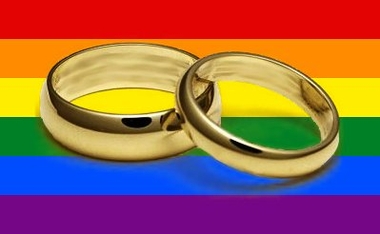
Kansas - Gay-marriage supports in Kansas were celebrating a pair of U.S. Supreme Court rulings on Wednesday as Republican Rep. Tim Huelskamp vowed to push for an amendment to the U.S. Constitution defining marriage as the union of one man and one woman.
The Kansas Family Policy Council, a conservative Wichita-based group, stressed that the state's gay-marriage ban is not affected by the rulings. In a statement, the organization vowed to "continue to emphasize and strengthen marriage and work to defend marriage."
"While this is a great day for many couples and families, Kansas and 36 other states still treat gay and lesbian Americans and their children as second-class citizens," Tom Witt, the Kansas Equality Coalition’s executive director, said in a written statement.
"We insist that Congress take the next step: Repeal that part of DOMA that continues to allow states like Kansas to ignore same-sex marriages performed in other states, such as Iowa and Minnesota. Should Congress fail to act, we hope the courts will once again step in to guarantee fair treatment for all Americans."
Huelskamp, R-Fowler, blasted the Supreme Court in a statement posted on his website and vowed to pursue a constitutional amendment. "Five activist justices have short-circuited the democratic process," he said, then added later: "This radical usurpation of legislative and popular authority will not end the debate over marriage in this country. Congress clearly must respond to these bad decisions."
Arkansas - The American Civil Liberties Union of Arkansas said the rulings provide some guidance if it mounts an effort to challenge Arkansas' gay marriage ban. "I think the rulings did shed some light on the situation by noting that having 2nd class citizens and 2nd class marriages runs afoul of equal protection," Holly Dickson, legal director for the ACLU of Arkansas. "It's a clear signal we're on stronger footing for a legal challenge, not just here but in all the states."
The state's congressmen and senators said they still support an amendment to the Arkansas Constitution approved by voters in 2004 that bans gay marriage. They said the rulings shouldn't affect the state's policy.
U.S. Sen. Mark Pryor, the state's only Democrat in Washington, told reporters he still believes marriage is between a man and a woman and said Arkansas' constitutional amendment settles the issue from a state perspective. Pryor said earlier this year he believed the DOMA was constitutional and disagreed with former President Bill Clinton, who has announced his opposition to the 1996 law he signed.
U.S. Rep. Tom Cotton, considered a potential Republican challenger to Pryor in next year's election, said he was disappointed in what he derided as the court's "liberal activist" decision on DOMA. "But I am pleased that state laws, such as the Arkansas Marriage Amendment, remain in effect to protect the traditional understanding of marriage," Cotton said in a statement released by his office.
Republican Sen. John Boozman said he was also worried by the ruling. "The majority's opinion essentially leaves it up to states to decide, but in doing so you are allowing a state definition to be applied for federal purposes," Boozman said. "States should be free to define marriage as they wish for their tax purposes, but federal tax law in regards to marriage should be based on a definition from Congress."
___
Oklahoma - While supporters of same-sex marriage declared the rulings a victory, the court did not specifically address the validity of gay marriage bans in roughly three dozen states, including Oklahoma.
"The Court's decisions confirmed that it is up to the states to decide how to define marriage, not the federal government," Attorney General Scott Pruitt said in a statement. "As a result, Oklahoma's constitutional provision that defines marriage in Oklahoma as between a man and a woman remains valid."
Scott Hamilton, an Oklahoma man who married his partner of more than 20 years in Connecticut in 2009, said he believes Wednesday's decisions by the Supreme Court will ultimately lead to more challenges at the state level.
"As is often the case with the Supreme Court, change happens in increments," said Hamilton, the executive director of the Oklahoma City-based Cimarron Alliance Foundation, a nonprofit group that supports gay rights. "I think people will be empowered now, and not just gay people, but people who love gay people. People who will stand up and say it's just not right to discriminate against people because of who you love."
Gov. Mary Fallin on Wednesday reiterated her opposition to gay marriage. "Like the vast majority of Oklahomans, I support traditional marriage," Fallin said in a statement. "I do not and will not support expanding the definition of marriage to include same-sex couples."
In other states outside our region ---
New Jersey - Advocates for gay marriage in New Jersey say they'll press their case in the Legislature and the courts after the U.S. Supreme Court ruling that invalidates parts of the federal Defense of Marriage Act.
New Jersey Gov. Chris Christie says the U.S. Supreme Court's ruling erasing part of a federal anti-gay marriage law was a "bad decision" and an example of "judicial supremacy." In January, the Republican governor and potential 2016 presidential candidate vetoed a New Jersey same-sex marriage bill. On a radio program Wednesday, he said he'd do the same to any new legislation.
Illinios - A socially conservative state senator announcing his bid for governor says he would respect the Supreme Court's gay marriage ruling if elected. Republican Bill Brady of Bloomington tells WSIU Public Radio in Carbondale he would act within the confines of the law but has concerns about the impact on religious freedom. Brady made his remarks Wednesday on a state fly-around to formally announce his candidacy. He has in the past backed constitutional amendments banning gay marriage.
Utah - A Utah state senator used a celebration over two Supreme Court gay rights decisions to propose to his longtime partner. Democratic state Sen. Jim Dabakis was giving remarks Wednesday during a party at Salt Lake City's rainbow flag-draped Club Sound when he asked Stephen Justesen to join him onstage. Dabakis described Justesen as "a wonderful man" he met 26 years ago before asking Justesen to marry him. Dabakis got on one knee and gave Justesen a ring while the crowd whooped.
The Mormon church criticized the U.S. Supreme Court's decision and Utah Gov. Gary Herbert vowed to defend the state's own voter-approved ban on gay marriage. Conservative and religious groups gathered Wednesday night in a Salt Lake City suburb in a "celebration of traditional marriage.
Wisconsin - Gay rights advocates hailed a pair of U.S. Supreme Court rulings Wednesday supporting same-sex couples as groundbreaking victories, but the decisions don't affect Wisconsin's gay marriage ban or require the state to recognize gay couples who wed in other states.
California - Backed by rainbow flags and confetti, thousands celebrated in California's streets after U.S. Supreme Court rulings brought major advances for gay marriage proponents in the state and across the country. Though wedding bells may be weeks away, same-sex couples and their supporters filled city blocks of San Francisco and West Hollywood on Wednesday night to savor the long awaited decisions as thumping music resounded.
Kentucky - Kentuckians on both sides of the same-sex marriage debate found reasons to cheer the U.S. Supreme Court's rulings on the issue, which come as some communities across the state debate gay-rights protections.
Louisville couple Jon Freels and J.D. Dotson talked about nuptial plans Wednesday after the high court struck down a provision of federal law denying federal benefits to married gay couples. The two would like to get married in a state that allows same-sex marriage and then return to Louisville, where they own and operate a gift shop.
"The bottom line for Kentuckians is that Kentucky's Marriage Amendment is left intact," said Martin Cothran, a spokesman for The Family Foundation of Kentucky, which helped lead the push for the state constitutional amendment outlawing same-sex marriages and civil unions.
Oregon - In Oregon, a 2004 ballot measure bans same-sex marriage despite near-uniform opposition from the state's highest quarters. Same-sex marriage supporters are readying two measures for a signature drive intended to reverse the ban, known as Measure 36.
Hawaii -Supporters of gay marriage quickly put together a rally at the Hawaii Capitol during afternoon rush hour to push lawmakers to go beyond a civil union law already in place. Hawaii's law allows same-sex and opposite-sex couples to enter into unions with the same state rights and responsibilities as traditional marriage without the title of marriage.
Story excerpted from AP dispatches. Copyright 2013 Associated Press.