


Hidden figures in Black History
- by Robin Dorner
Editor in Chief
I have always loved Betty Boop. She is carefree, sassy, sexy and fun. She is my favorite cultural icon. Several people have said I remind them of Betty Boop. I am proud of that comparison, in part, because the inspiration for the character originated there.
I was recently at a big box store when I heard a woman say to her child, “Why do you want that Betty Boop figurine when that character’s attributes were stolen from a Black woman?” It sadly reminded me of the generational abuse and fleecing of our African American community, and this woman’s words inspired me to write this story.
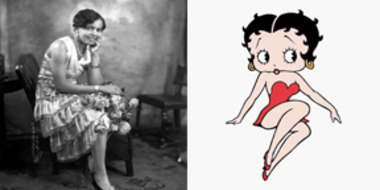
It’s perhaps not widely known, but Esther Jones — a black Harlem singer who performed regularly at the Cotton Club as Baby Esther — was the inspiration for the beloved cartoon sex symbol Betty Boop, according to the NY Daily News.
Betty Boop was a very popular cartoon character, which partly explains why the origin issue came to light. She was presented as a white cartoon character who appeared in the 1930s Max Fleischer studio cartoons, singing the signature “boop-oop-a-doop” phrase.
A Max Fleischer Studio animator claimed the 1930 caricature was of Helen Kane, a popular white singer and actress who served as the cartoon’s visual inspiration. In 1932, Kane filed a $250,000 lawsuit against Max Fleischer and the film company, contending they had exploited her persona and asserting she had invented the phrase, “Boop-oop-a-doop,” most famously heard in her 1928 hit song, I Wanna Be Loved By You.
However, before a judge in the state Supreme Court in Manhattan, the defense called Ester Jones’ manager, Lou Walton, to testify. Walton said he taught Esther how to merge the scat lyrics “boo-boo-boo” and “doo-doo-doo” and use them in her uptown performances. He added that he saw Baby Esther’s acts with Kane before the white singer started her “booping.”
When Walton produced a sound film featuring Baby Esther practicing in her baby voice and “scatting” as proof, Kane was exposed as a fraud at the height of her career and lost the case.
In The Magic Behind the Voices: A Who’s Who of Cartoon Voice Actors, authors Tim Lawson and Alisa Persons agreed that Kane had made the phrase famous in her song I Wanna Be Loved By You, but several other women voiced the Boop character, including Mae Questel, who was actually imitating Kane’s voice.
Charles Solomon, the author of The History of Animation, summed up the case and why Kane lost, saying, “The Fleischers won the case by proving that a black entertainer named Baby Esther had previously used the phrase before either Kane or Questel.”
Sadly, Ester Jones never received any credit or royalties for the Betty Boop character. Her death remains shrouded in mystery. Only a few recordings of her work remain, and what little is known of her came out in a lawsuit that exposed the real Betty Boop’s true origins once and for all.
The Gayly online. 2/1/26 @ 6:11 p.m. CST.