


Toronto Mayor Olivia Chow: We need media to fight “homophobic bullshit”
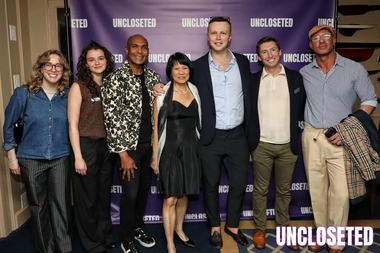
- by Spencer Macnaughton
Uncloseted Media
This story was originally published by Uncloseted Media, an LGBTQ focused investigative news outlet.
“Canada, we are well-known to build equality, caring, and we stand up for each other, and that is so special,” Toronto Mayor Olivia Chow told a room of over 100 prominent Canadian queer people and allies last Tuesday at Uncloseted Media’s first Canadian fundraiser at the Royal Canadian Yacht Club.
“Right now, people are not really reading the news. … So you have to cut through a whole lot to capture people’s imaginations. You have to really dig deep because truth matters. That’s why journalism matters,” she told the crowd.
“If we don’t have truth, we have this,” she said, pointing to Uncloseted Media stories covering anti-LGBTQ movements on a TV screen. “Can I call it bullshit? Homophobic bullshit!”
In a time when so many politicians have ditched LGBTQ rights or watered down their support, Mayor Chow’s unfiltered remarks were refreshing.
And I think that’s a core element to what makes Canada stand out on human rights issues.
As a born-and-raised Canadian who has now lived in the U.S. for 12 years, I have a deep understanding of the nuances of how each country approaches LGBTQ rights. And this event represented those differences.
From a national identity standpoint, people around the world see Canadians as polite, practical and cautious. And to a certain extent, that’s true. But I remember learning in my “Introduction to Canadian Studies” course at McGill University that the most integral aspect of the Canadian identity and the pride we feel for our country is that we are not American.
After hearing that at first, I remember it sounding a bit pompous. But years later, I get it. Many things just work better in Canada: more equitable healthcare, better public education and more nondiscrimination protections.
All of these things contribute to a society that treats underprivileged groups with more dignity and respect. “The U.S. is a melting pot of ethnic groups. Canada is a multicultural mosaic,” I remember my prof saying.
And it’s true: The social programs we offer for immigrants, racial minorities and—yes—LGBTQ people, are much stronger than those offered south of the border. The Canadian ethos aims to celebrate the cultural independence of all groups rather than have them assimilate into a single identity.
And don’t get me wrong: Canada is far from perfect. Racism, queerphobia and xenophobia are unfortunately alive and well in many pockets of the country. And we have to be wary of avoiding the stories that make us look bad.
But I think the priorities outlined above, coupled with the pride we take in not being American, fuel a collective national identity that involves standing up for the underdog even when it isn’t popular, or speaking out against adversity even when there could be consequences.
That may be why over 4,000 LGBTQ Americans contacted the nonprofit Rainbow Railroad about moving to Canada in the first eight months of 2025. Or why there was a nationwide movement called “Elbows Up” to resist Trump’s tariffs and insults towards the country last year.
For all of the reasons above, starting a nonprofit arm in Canada was a no-brainer. We’re a global leader in LGBTQ rights, and when queer people face adversity, we show up.
The Gayly online. 5/22/26 @ 4:58 p.m. CST.